
_Optimized.webp?width=3000&name=Boundless100_Lookbook%20(1)_Optimized.webp)



Gifting trends can change quickly, but the strongest programs aren’t just built around what’s popular. They begin with the recipient, the business objective, and the experience a brand wants to create.
Fall is when many organizations begin planning their highest-volume gifting programs, from employee milestones and client appreciation to year-end recognition, sales kickoffs, and incentive travel. Starting early protects product availability and production timelines, but it also creates space to make more intentional decisions.
The best gifting programs don’t start with products. They start with people. Who are you recognizing? What matters to them? What should the gift communicate about your relationship?
Trends can inspire the answer, but they should never replace the strategy.
What are the biggest corporate gifting trends for 2026?
The biggest corporate gifting trends for fall 2026 are everyday luxury, retail-quality merchandise, personalization and gift-of-choice, experience-driven gifting, and fewer but better products.
Across all five, one idea connects them: recipients increasingly expect gifts to feel useful, intentional, and selected for them rather than simply distributed to them.
1. Everyday Luxury: Comfort meets utility.
Comfort continues to resonate, especially as cooler weather approaches. The opportunity is to move beyond overtly seasonal items and choose elevated products that fit naturally into everyday routines.
Think premium blankets, well-designed drinkware, travel-ready layers, or cozy gift boxes that pair consumable treats with something lasting. These gifts feel timely in fall without becoming irrelevant when the season changes.
Seasonal appeal gets a gift noticed. Year-round usefulness keeps the brand in view. That combination creates more lasting value for both the recipient and the brand giving it.

2. Retail expectations are reshaping branded merchandise.
People compare branded merchandise with the products they choose for themselves. Recognizable brands, thoughtful design, and quality materials all raise perceived value, but the logo should support the product rather than overpower it.
A useful test is simple: Would the recipient want this item even without the logo? If the answer is yes, the product has a much better chance of earning a place in their life.
remium options such as JBL earbuds, a TUMI backpack or a The North Face jacket arrive with established brand equity. Subtle decoration then connects that existing trust and desirability to your own brand experience.
Want more inspo? Explore our Retail Brands Collection.

3. Personalization goes beyond a name or logo.
One gift rarely fits everyone on the list. A new hire, a ten-year employee, a top client, and a President's Club winner represent different relationships and moments. Personalization should reflect those differences. Sometimes that means adding an individual's initials or a thoughtful message. Increasingly, it means giving the recipient a meaningful choice.
A curated collection allows people to select the product, color, size or style that best fits them, making the program feel personal without creating an operational burden for the organization. Choice-based platforms such as Gifted by Boundless and Boundless OnDemand can support personalization at scale. The key is curation: too many options create friction, while a focused collection makes the experience feel intentional.
4. Gifting is becoming an experience.
The gift is no longer necessarily the entire experience. Increasingly, it is part of one.
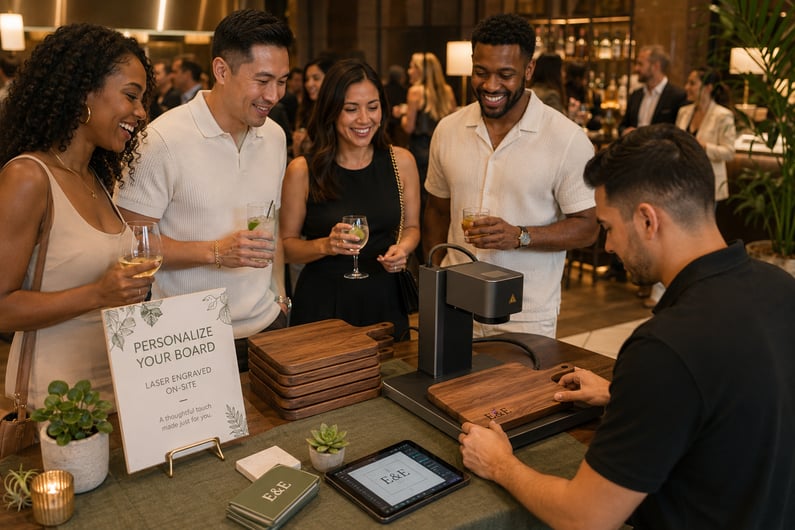
A premium product handed across a registration desk is a gift. That same product selected from a curated collection, fitted onsite, personalized in front of the recipient, or discovered through an interactive gifting lounge becomes a brand experience.
Onsite engraving, embroidery, retail-inspired pop-ups, and gift-of-choice stations transform recipients from passive recipients into participants. For incentive programs, gifting can also unfold across the journey. This President's Club experience used multiple gifting moments throughout a Turks and Caicos trip to recognize top performers and deepen the sense of occasion.
Delivered gifts can create an experience, too. Custom packaging, thoughtful inserts and a digital layer, such as a QR code leading to a welcome video, contest, or next step can extend engagement beyond the unboxing. Building a branded box or collection brings creative design, sourcing, kitting, and fulfillment together for that kind of coordinated moment.
Experience creates the moment. Merchandise preserves the brand memory.
Explore onsite gifting with Experiences by Boundless.

5. Fewer, better gifts.
The future of corporate gifting is not more merchandise. It is more meaningful merchandise. One well-designed, useful gift can create more value than a bundle of products selected to make the box feel full.
This shift supports stronger brand perception and more responsible consumption. Products with genuine utility, durable construction and thoughtful sourcing are more likely to be used, kept, and associated with the giver. If a gift does not earn a place in someone's life, it probably will not earn much brand value either.
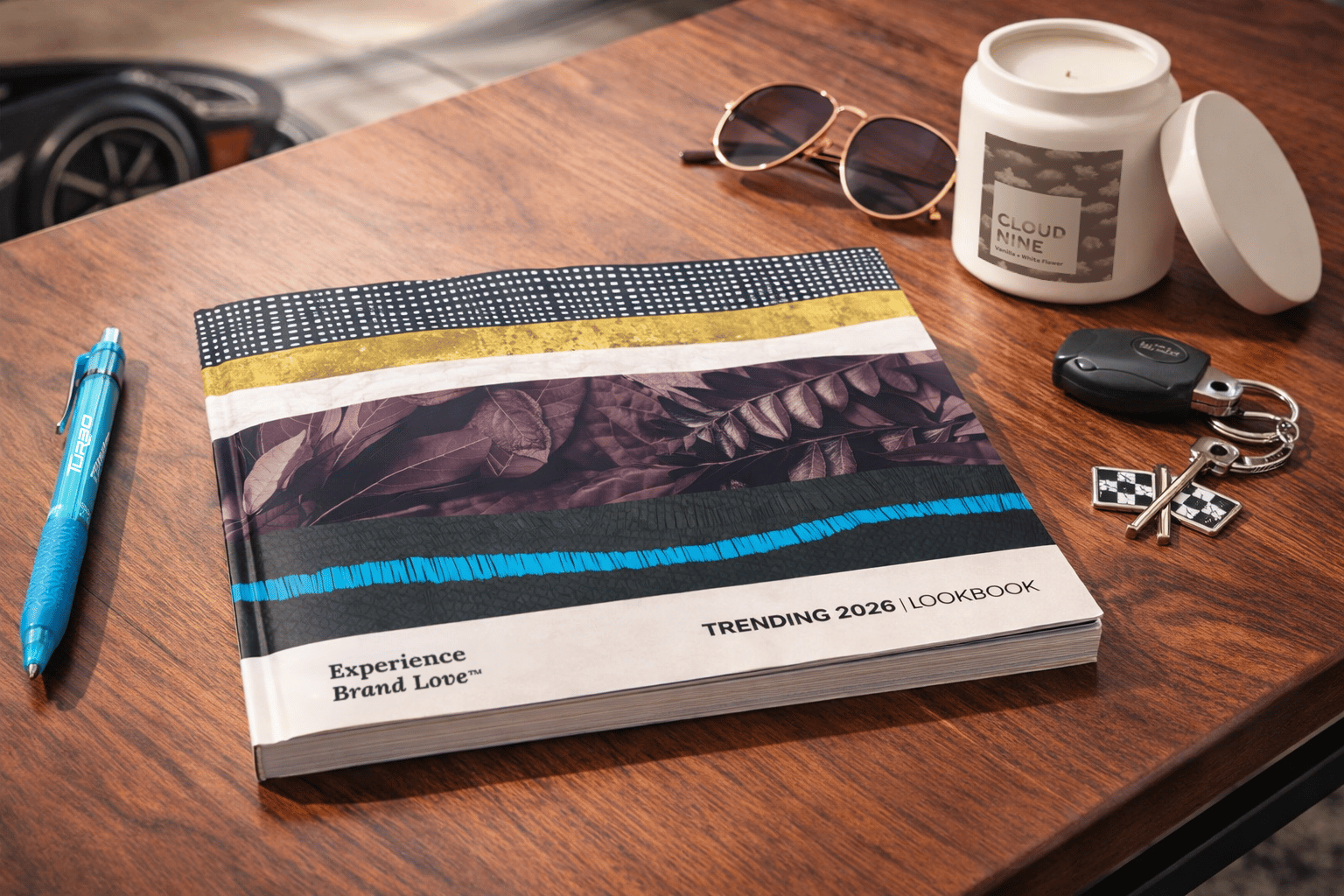
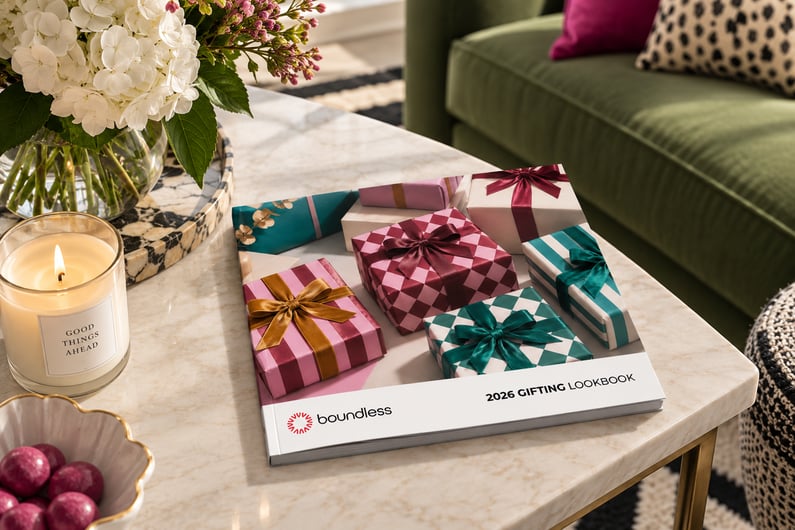
Ready to see the products we’re already loving? Check out the 2026 Gifting Lookbook here.
What makes a great corporate gift?
A great corporate gift balances six factors: relevance, utility, quality, timing, experience, and longevity.
- Relevance: It fits the recipient, relationship, and occasion.
- Utility: It belongs in the recipient's real life or routine.
- Quality: Its design and performance reflect how the brand wants to be perceived.
- Timing: It can be produced and delivered while the moment still matters.
- Experience: Its selection, presentation, and delivery make the recipient feel considered.
- Longevity: It remains useful, memorable, or meaningful well beyond the initial interaction.
Four corporate gifting mistakes to avoid
1. Ordering too late.
Late planning limits inventory, decoration, and packaging options while increasing the risk of rush fees or missed delivery dates. Begin with the in-hands date and work backward with enough time for approvals, samples, production, kitting, and fulfillment.
For high-volume year-end programs, early fall should be the planning window, not the starting line for product discovery.

2. Choosing products before defining the audience and objective.
A trending product is not automatically the right product. Define who the program is for, why the organization is gifting, and how recipients should feel before reviewing merchandise. That strategic filter makes product selection faster and more effective.
3. Ignoring presentation and delivery.
The experience begins before the box is opened. Packaging, messaging, delivery timing, and the path to selection all shape perceived value. Even a premium product can lose impact if it arrives without context or care.
4. Optimizing for price or quantity instead of perceived value.
A lower unit cost does not create value if recipients do not want or use the item. Rather than filling a box or reaching the largest possible list by default, invest in the audiences and products most closely connected to the business objective.
How to build a corporate gifting strategy
Trends are useful inputs, not instructions. Before selecting a product, align the program around six questions:
- Who are we gifting?
- Why are we gifting them?
- How should they feel?
- What action, memory or emotion should the gift reinforce?
- How does it connect to the broader brand or employee experience?
- What will success look like?
From there, build a curated product strategy that fits the audience, moment, budget, and delivery experience. A sales team completing a difficult quarter may value a wellness-focused recovery gift. A technology company welcoming new clients might choose premium power banks or portable speakers. A real estate firm could mark a closing with a personalized home item. The right answer changes because the relationship and objective change.
Boundless approaches branded merchandise as a media channel. Through Your Merch Media Agency™, strategy, creative, merchandise, technology and fulfillment work together around a defined business outcome, rather than treating the product as an isolated giveaway.
Tag in your Brand Consultant at any time to find the best gifting strategy for your goals.
How do you measure corporate gifting success?
A gifting program should begin with the business objective because the objective determines what success should look like. Not every program needs revenue attribution, but every program should have a clear signal of effectiveness.
- Gift redemption or selection rate
- Employee participation and recipient satisfaction
- Event engagement, dwell time, or onsite participation
- Client responses, meetings generated, or follow-up engagement
- Program participation and repeat engagement
- Brand recall or social amplification
- Retention, recognition, or relationship indicators
Establish the measure before launch, use trackable redemption or response paths where appropriate, and gather recipient feedback. Even a simple combination of participation, satisfaction, and a business-specific outcome creates a more useful story than distribution volume alone.
Plan ahead, then make the moment count
Don’t just chase what’s hot.
Anticipate what people will continue to value and connect that insight to a specific audience, relationship and objective.
Our top tips? Start early enough to protect choice and quality. Curate products people would choose for themselves. Make personalization meaningful. Consider how packaging, technology and live experiences can turn delivery into participation. Then measure the response against the reason the program exists.
When those pieces work together, a corporate gift becomes more than an item. It becomes a tangible reminder of how the brand made someone feel.
That’s a true Brand Love moment.
READY TO PLAN YOUR GIFTING PROGRAM?
Explore the 2026 Gifting Lookbook for ideas, then connect with Boundless to build a the perfect gifting program around your audience, objective, and budget.